How to Protect Your Car From NJ Road Salt and Brine
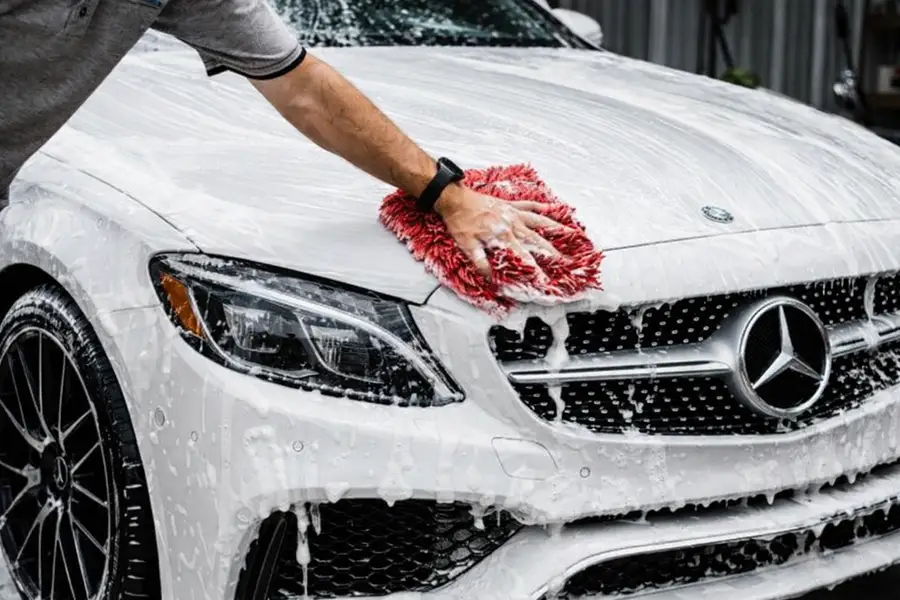
Short answer: to protect your car from New Jersey road salt, get a protective layer on the paint and wheels before winter (ceramic coating is the longest-lasting option), rinse the car and especially its underside within a few days after every storm once it is above freezing, avoid brush car washes that grind salt into the paint, and give it a full detail in spring. Salt and brine do their worst damage underneath and on lower panels, so that is where most of your effort should go.
If you drive Route 202, Route 31, I-78 or I-287 in winter, you have seen the white crust that builds up by February. Here is how that damage actually happens and the routine we recommend to customers across Hunterdon and Somerset counties.
Why brine is harder on cars than rock salt
New Jersey treats roads before storms with liquid brine, a salt solution sprayed on the pavement so snow and ice do not bond to it. Then rock salt goes down during the storm. Brine is the one to worry about for three reasons:
- It sprays as a fine mist that reaches seams, pinch welds, brake lines and the inside of rocker panels.
- It stays damp, and moisture is what salt needs to do damage.
- It goes down before storms too, so cars get coated even on dry days.
Salt speeds up corrosion whenever bare metal is exposed. On modern cars the paint itself holds up well; the trouble starts at rock chips, scratches that reach metal, and the unpainted parts underneath.
Where salt damage shows up first
- Brake and fuel lines under the car.
- Rocker panels and lower door edges, inside and out.
- Wheel wells and suspension parts.
- Rock chips on the hood and front bumper, where bare metal is exposed.
- Wheels, where brake dust and salt bake on together and pit the finish.
- Door jambs, trunk and hood seams, where slush collects and dries.
- Carpets and floor mats, where boots leave white salt stains that never fully vacuum out.
Before winter: a checklist
- Get a full exterior detail with decontamination. Start the season with clean, smooth paint so protection can bond.
- Put protection on the paint. A sealant lasts a few months; a ceramic coating in Flemington lasts years and makes salt rinse off with a hose. Schedule coating in early fall so it has time to cure.
- Protect the wheels. Coated wheels are the single most satisfying winter upgrade; brake dust and salt wipe off instead of baking on.
- Touch up rock chips. Any chip down to metal is a rust starting point once salt gets to it.
- Swap to rubber floor mats. They catch the slush that would otherwise soak into the carpet.
- Check your wipers and washer fluid. Brine film on the windshield is a real visibility problem at night.
During winter: the washing routine
- Wash every one to two weeks while roads are being treated, and within a few days after each storm.
- Wash when it is above freezing so water does not freeze in locks, seals and door jambs.
- Rinse the underside. A touchless wash with an underbody spray is fine between hand washes.
- Pre-rinse heavily before touching the paint. Salt and grit are abrasive; wiping them dry scratches.
- Avoid brush and tunnel washes. They drag grit across the paint.
- Open the doors and wipe the jambs after washing, where salty slush collects.
- Do not leave slush packed in wheel wells. Knock it out when you can.
Coated cars are much easier here. On a ceramic-coated car, most of the salt film comes off with a rinse and a gentle wash, which means you actually keep up with it. Our guide on how long ceramic coating lasts explains what winter does to a coating over time.
What ceramic coating does and does not do in winter
A coating helps a lot with the paint, wheels and glass. It gives salt and brine nothing to bond to, it resists staining, and it makes frequent washing faster and safer. What it does not do:
- It does not protect the undercarriage or bare metal.
- It does not stop rock chips. Only paint protection film does that.
- It does not replace washing. A coated car covered in brine for a month is still sitting in brine.
Interior salt stains
Salt stains on carpet are more than cosmetic. The salt holds moisture, and wet carpet over a winter can lead to musty smells. The fix is extraction with hot water, not scrubbing with a household cleaner, which usually spreads the stain. An interior detailing appointment in March or April is the best time to reset the carpets once the salt season is over.
Spring reset
Once the sweepers have cleared the roads, give the car a proper spring detail:
- A full wash with iron decontamination to pull out the fallout that built up all winter.
- A thorough underside and wheel well rinse.
- An inspection of the paint for new chips and a check of how the coating is performing.
- Interior extraction to remove salt from carpets and mats.
We come to you for all of this. Our mobile auto detailing covers Flemington and towns across Hunterdon County and Somerset County, so the spring reset happens in your driveway. The only exception is ceramic coating, which is done in our Flemington studio so it can cure properly.
The short version for busy people
If you only do three things this winter: protect the paint and wheels before the first storm, rinse the underside after every storm once it is above freezing, and book a full detail in spring. That alone prevents most of the salt damage we see on cars around here.
Frequently asked questions
How often should I wash my car in a New Jersey winter?
Every week or two when roads are being treated, and within a few days after a storm once the temperature is above freezing. Focus on the lower panels, wheel wells and underside, where salt and brine collect.
Does ceramic coating protect against road salt?
It protects the paint and, if coated, the wheels. Salt does not bond to a coated surface the way it does to bare clear coat, so a rinse removes it. A coating does not protect the undercarriage, brake lines or other bare metal underneath the car.
Is an undercarriage wash worth it?
Yes, in winter. Salt and brine do their worst damage under the car, on brake lines, fuel lines, suspension parts and the inside of rocker panels. A touchless wash with an underbody spray is a good between-detail habit.
Is it bad to let salt sit on my car?
The longer it sits, especially when it is damp and temperatures rise above freezing, the more it attacks bare metal and any chips in the paint. Rinsing it off within a few days limits the damage.
When should I ceramic coat my car before winter?
Early to mid fall is ideal. The coating needs time to cure, and you want it fully hardened before the first brine goes down, usually some time in November or December in Central NJ.
Related guides
- Ceramic Coating vs PPF vs Wax: Which Is Best for NJ Drivers?
A side-by-side comparison of wax, sealant, ceramic coating and PPF for New Jersey roads, with costs, lifespans and when to combine film and coating.
- Ceramic Coating Aftercare: The First 7 Days and Beyond
What to do in the first week after coating, how to wash a coated car, what to avoid, and a maintenance schedule that keeps it performing.