Paint Correction Before Ceramic Coating: Why Prep Matters
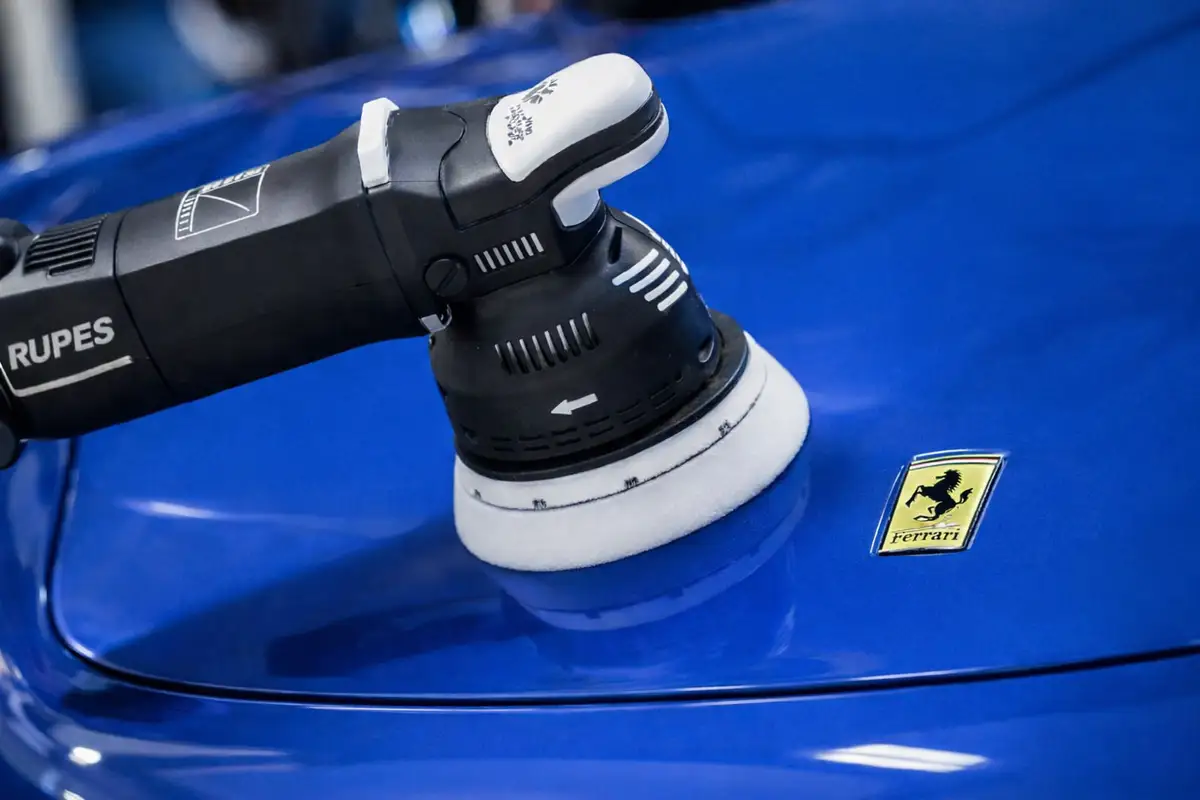
Short answer: yes, paint correction should come before ceramic coating on almost every car. A coating is clear and hard, so it locks in whatever the paint looks like underneath, swirls and all. Newer paint usually needs a thorough decontamination and a one-step polish; older daily drivers often need a two-step correction. Skipping prep is the most common reason coatings look disappointing or wear out early.
We see it every season: someone paid for a coating, the car beaded water nicely for a few weeks, and then the first sunny afternoon showed every swirl mark from years of car washes, now sealed under a hard layer. Here is what proper prep involves and how to tell how much your car needs.
Why the coating cannot fix the paint
Ceramic coating adds gloss and protection, but it has almost no filling ability. It is measured in microns. A swirl mark is a scratch in the clear coat; the coating flows into it and cures, and the scratch is still there, just shinier. Worse, once the paint is coated, fixing those swirls means polishing the coating off again.
So the goal of prep is simple: get the paint looking the way you want it to look for the life of the coating, and make it perfectly clean so the coating bonds to the clear coat and not to dirt, oils or old wax.
What proper prep includes
- Thorough wash, including wheels, wells, jambs and trim.
- Chemical decontamination with an iron remover to dissolve embedded brake dust and rail dust. On New Jersey cars this step often turns the paint purple with fallout.
- Tar and sap removal, common on anything that has been on freshly paved roads or parked under trees.
- Mechanical decontamination with clay to remove whatever is still bonded to the surface.
- Paint correction: machine polishing, one or more steps, to remove swirls, haze and light scratches.
- Panel wipe to remove polishing oils so the coating bonds directly to bare clear coat.
Only then does the coating go on. On our ceramic jobs, all of this happens inside our Flemington studio, where the car also cures afterward.
One-step vs two-step paint correction
| One-step polish | Two-step correction | |
|---|---|---|
| What it does | Single pass with a polish that cuts lightly and finishes well | Heavier cutting pass, then a separate finishing polish |
| Removes | Light swirls, haze, dullness, light water spotting | Moderate to heavy swirls, most wash scratches, stronger water spots |
| Typical time | Most of a day on a mid-size car | A full day or longer |
| Best for | New cars, leases, well-kept paint | Daily drivers with years of automatic car washes, dark colors |
| Clear coat removed | Very little | More, still small when done carefully |
Neither removes scratches that have gone through the clear coat, rock chips, or clear coat that is already peeling. Those need touch-up or body work, and a coating will not hide them.
How to tell what your car needs
Take the car into direct sunlight, or shine a phone flashlight across a dark panel at night, and look at the reflection:
- You see a clean point of light with a faint haze around it: light marring. A one-step polish is usually enough.
- You see a spider web of circular scratches around the light: swirls. A two-step correction will make a real difference.
- You see individual deeper lines you can catch with a fingernail: those are likely too deep to remove fully. Correction will soften them, not erase them.
We make the final call on the car itself. Before quoting a coating, we look at the paint under proper lighting and can polish a small test section so you can see the difference before deciding on the level.
New cars need prep too
It surprises people, but new cars are rarely perfect. Between the factory, transport, the lot and the dealer's prep wash, most new cars we see have light marring and bonded fallout. The good news is that new paint usually needs only a one-step polish, which is the least expensive time to coat a car. If you are picking up a new car, book the coating soon after delivery, before winter adds its own damage.
Dark colors and soft paint
Black, dark blue and dark gray show everything, so they reward a two-step correction more than white or silver. Some paints are also softer than others. Soft paint corrects quickly but mars easily; hard paint takes longer to cut. Both change the time a job takes and therefore the price, which is one reason we do not quote coatings sight unseen.
Paint correction on its own
Not everyone wants a coating. If you just want the swirls gone and the gloss back, standalone paint correction starts at $150 and is a mobile service: we come to your home or office. Follow it with a sealant for a few months of protection, or with a coating when you are ready.
When correction is part of a ceramic coating job, it happens in our studio as part of the coating process, and the level of correction is built into the coating quote. See ceramic coating in Flemington for how that drop-off works, and our NJ ceramic coating cost guide for how correction affects the price.
Frequently asked questions
Do I need paint correction before ceramic coating?
Almost always some. Even new cars usually have light marring from transport and dealer washing. At minimum the paint needs a full decontamination and a one-step polish; older paint often needs two steps. The coating locks in whatever is underneath it.
Is a one-step polish enough before ceramic coating?
For newer or well-kept paint, often yes. A one-step removes light swirls and haze and leaves the paint glossy and clean. If you can see heavy swirls or scratches in direct sun, a two-step correction will give a noticeably better result under the coating.
How long does paint correction take?
A one-step polish on a mid-size car is typically most of a day. A two-step correction can take a full day or longer depending on vehicle size, paint hardness and how damaged it is.
Does paint correction damage the clear coat?
Correction removes a very thin layer of clear coat, which is how it levels out scratches. Done properly, the amount removed is small. That is exactly why it should be done carefully and not repeated every year.
How much does paint correction cost?
At Detail Jockey, standalone paint correction starts at $150 and is done as a mobile service at your home or office. Correction as part of a ceramic coating job is done in our Flemington studio and included in the coating quote based on the level your paint needs.
Related guides
- How Much Does Ceramic Coating Cost in NJ? (2026 Guide)
Real ceramic coating prices for New Jersey in 2026: what moves the price, sourced market ranges, why cheap jobs fail, and what our Flemington studio charges.
- How Long Does Ceramic Coating Last? (And How to Make It Last)
Professional coatings typically last 2 to 5 years. Here is what decides where yours lands, how to spot wear, and how to stretch its life.